
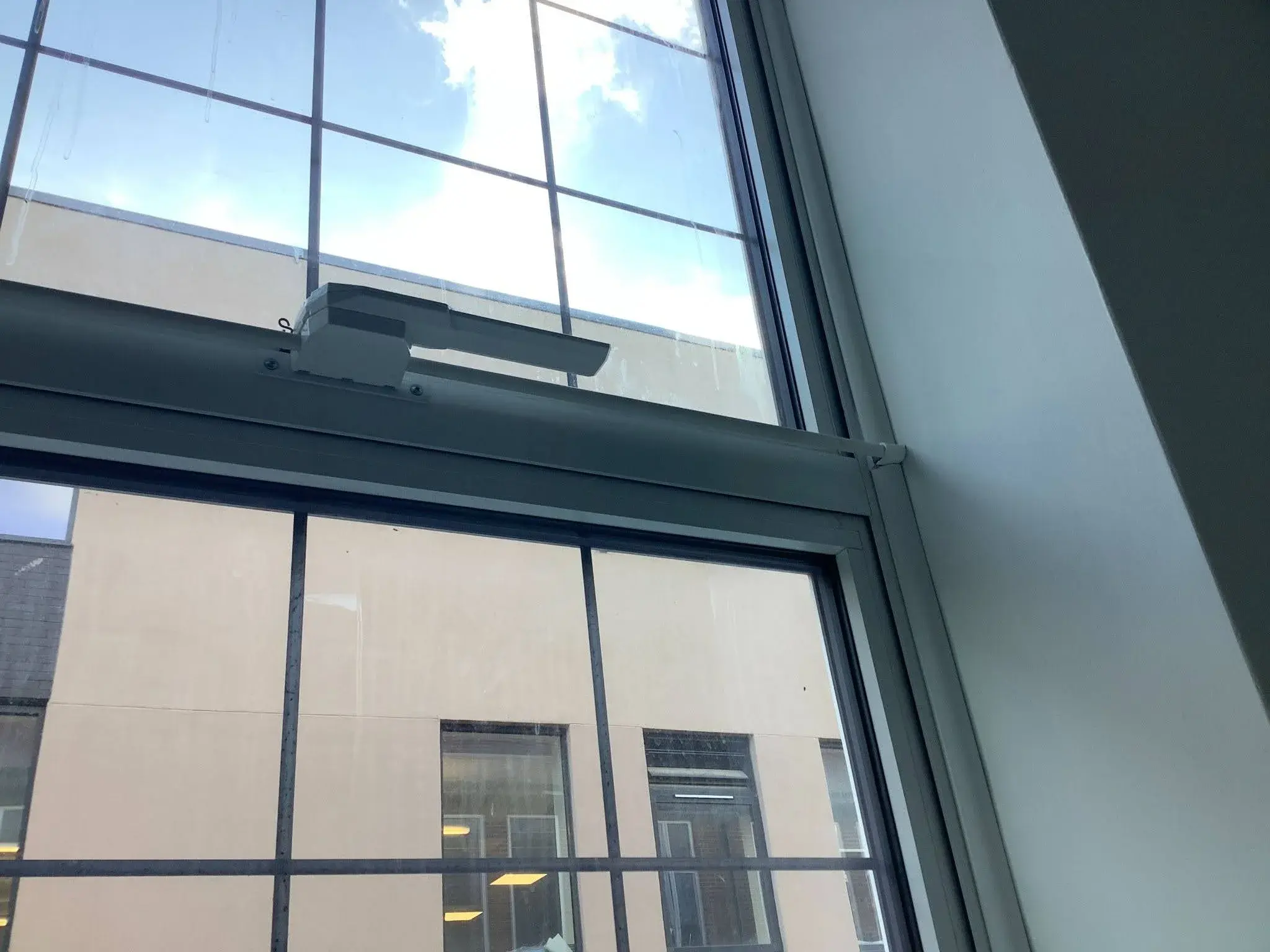
Curtain glazing refers to the glazed element of a curtain wall system, where glass is supported within a non-load-bearing frame fixed back to the building structure. For those asking ‘what is curtain glazing’, it is best understood not as a standalone product, but as part of a wider façade assembly designed to resist environmental loads while remaining structurally independent from the primary frame.

This distinction is important because performance is governed less by the glass itself and more by how the system is assembled, supported, and integrated with adjacent elements. In practice, this is where performance risk is either controlled or introduced. Read on to find out more.
Curtain Wall Glazing Systems: How Are They Assembled?
Most curtain wall glazing systems in the UK fall into two broad types: stick systems and unitised systems.
1. Stick systems are assembled on site from individual mullions, transoms, and glazing units. This allows for a degree of adjustment during installation, particularly where structural tolerances are variable. However, the process is labour-intensive and reliant on site conditions, which can affect installation quality and programme duration.
2. Unitised curtain glazing systems, by contrast, are pre-fabricated in factory conditions and installed as complete panels. This improves consistency and reduces installation time, but introduces a dependency on accurate setting out and early design coordination. Once fabricated, panels offer limited scope for modification, which can increase risk if upstream design information is incomplete. Where this coordination is not resolved early, issues typically emerge later as programme delays or rework.
In both cases, the aluminium framing incorporates thermal breaks to reduce heat transfer, while gaskets and seals manage air and water tightness at the glass interface. These systems must also integrate with adjacent façade elements, including SFS, cladding systems, and internal finishes, where coordination at interfaces is critical to overall performance and buildability.
Performance Characteristics Of Curtain Glazing
Curtain glazing systems must meet a range of performance requirements, which are determined by both system design and installation quality. These typically include:
- Thermal efficiency: Achieved through thermally broken aluminium framing and appropriate glazing specification to meet Part L requirements.
- Air and water tightness: Managed through gasket systems, drainage design, and pressure equalisation within the façade.
- Acoustic performance: Dependent on glazing specification, system build-up, and sealing at interfaces, particularly in urban or high-noise environments.
- Fire-stopping interfaces: Critical at slab edges and junctions with other elements, where fire-stopping must be coordinated with the curtain wall system to maintain compartmentation and comply with Part B requirements.
In practice, performance is not solely a product characteristic, but a result of how the façade is detailed, installed, and coordinated with adjacent packages.
Curtain Wall Glazing Systems And Design Responsibility
Curtain wall glazing systems are typically design-and-build packages, meaning the façade contractor takes responsibility for detailed design based on performance requirements set by others. In practice, this creates a layered design structure. The architect defines intent, the structural engineer defines movement criteria, and the façade contractor resolves how the curtain glazing system satisfies both. Where these inputs are incomplete or misaligned, responsibility becomes blurred. This is often where commercial and coordination risk begins to develop.
A recurring issue is movement allowance. Structural engineers may specify allowable deflection limits, but how these are accommodated within curtain glazing systems is left to the façade contractor. If these assumptions differ, the result is often redesign or dispute rather than a straightforward technical solution. In many cases, these issues only become visible once installation is underway, when they are more costly to resolve.
Measurement And Cost Planning Challenges
Curtain glazing introduces complications at the measurement stage that are not always obvious. Unlike more discrete elements, curtain wall glazing systems are measured across continuous elevations, often with varying mullion spacing, floor heights, and interface conditions. This can create ambiguity in how quantities are defined. For example, changes in floor-to-floor height or slab alignment can alter the amount of framing required without significantly affecting the visible façade area. As a result, cost comparisons between tenders can be misleading if underlying assumptions differ, often masking differences in scope, assumptions, and risk allowances rather than genuine pricing efficiency.
Openings, interfaces with doors, and integration with other façade elements further complicate measurement. These are not always consistently accounted for, particularly where responsibilities are split across packages. This is one of the more common reasons façade packages shift from competitive tenders to variation risk later in the programme.
Cost Structure And Procurement Considerations
The cost of curtain glazing systems is influenced by several key factors, including:
- Materials: Aluminium framing, glazing specification, and associated components
- Fabrication: Off-site manufacturing for unitised systems or on-site assembly for stick systems
- Installation: Labour requirements, installation methodology, and programme duration
- Access equipment: Scaffolding, mast climbers, or cranes required to install the façade
- Preliminaries: Site setup, logistics, and programme-related costs
- Testing and compliance: System testing, certification, and quality assurance requirements
Understanding these cost drivers is essential when comparing tenders, as differences often reflect scope, assumptions, and risk allocation rather than direct cost efficiency.
Sequencing And Access Dependencies
Curtain glazing systems are heavily dependent on access strategy, which is often determined late in the programme. For example, installation may rely on mast climbers, scaffolding, or cranes, each of which imposes different constraints on sequencing. Unitised curtain glazing systems often require crane access for panel installation, which must be coordinated with structural works and other trades competing for lifting capacity.
Stick systems, while more flexible in terms of installation, can extend programme duration due to the reliance on site assembly. This can create knock-on effects for follow-on trades, particularly where internal works depend on early enclosure.
These dependencies mean that the cost and programme implications of curtain glazing are often tied as much to site logistics as to the system itself. In practice, access and sequencing decisions can have as much impact on programme risk as the façade system selection itself.
Variation Risk And Commercial Control
One of the more significant characteristics of curtain wall glazing systems is their exposure to variation risk. Because the system interfaces with multiple elements (e.g. structure, internal finishes, and adjacent façade packages), changes in any of these areas can impact the curtain glazing scope. This is particularly relevant where design information is incomplete at the tender stage.
Variations often arise not from changes to the façade itself, but from changes elsewhere in the project that affect interface conditions. For example, adjustments to slab edge geometry or internal layouts can require reconfiguration of curtain glazing components. Curtain walling rarely fails because of the glass itself; it is the interfaces that typically introduce risk. Managing this risk requires a clear definition of scope and assumptions at an early stage. Without this, cost certainty is difficult to achieve, regardless of the system selected.
From a commercial perspective, this also extends to lifecycle considerations. Maintenance access, replacement strategy, and long-term performance should be assessed alongside initial cost when evaluating façade packages. Coordination with systems such as SFS and other façade elements is also critical to reducing interface risk and maintaining overall performance.
Specification And Compliance Considerations
Curtain glazing systems must be designed and delivered in line with project-specific Employer’s Requirements, UK Building Regulations, and relevant British Standards. This includes compliance with Part L (thermal performance), Part B (fire safety), and applicable CWCT guidance for façade performance.
This means assessing not only whether a system meets performance criteria, but also whether compliance is supported by appropriate testing, certification, and installation detail. This is essential when evaluating value beyond the lowest tender and understanding the true risk profile of a façade package.
Next Steps
If you’re reviewing a curtain walling package and want to better understand where cost, programme, and interface risks may sit, early input can help clarify scope and support more predictable outcomes. For more information, please contact one of our team members today to discuss your project.