
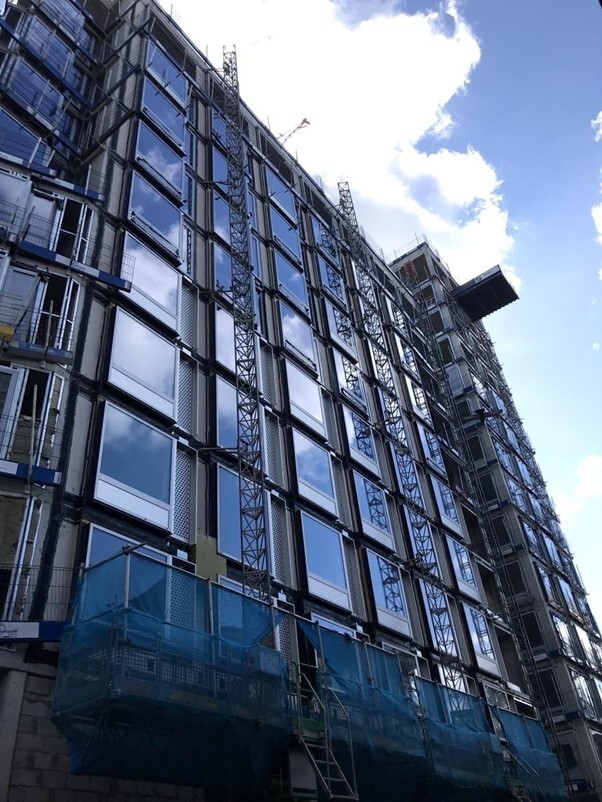
In specialist glazing projects, the timing of façade input has a direct effect on how decisions are made and how much flexibility remains in the design. Façade systems sit across multiple packages, structure, envelope, and internal works, so their design depends on information from several sources. If those inputs are still being developed, the façade design will either proceed on assumptions or be deferred. Neither is neutral in terms of cost or programme. In practice, this is often where commercial and programme risks are first introduced. Read on as we discuss the importance of early engagement project management for commercial glazing projects.

Early Engagement And Information Quality
Façade design relies on specific inputs: structural movement allowances, fixing zones, slab edge positions, and interface details with adjacent systems, among other factors. Where these are not tightly defined, façade contractors must either make allowances or leave elements unresolved.
Early engagement changes how this is managed. Instead of progressing on provisional assumptions, façade specialists can review available information and identify where it is insufficient or inconsistent. This allows your design team to resolve gaps before they become embedded in the façade package. Most façade issues do not originate during installation; they stem from incomplete or misaligned information at this stage.
For example, fixing strategies for glazing systems depend on confirmed structural zones. If these are adjusted later, the façade design may need to be reworked to suit revised conditions. Addressing this earlier reduces the likelihood of redesign once fabrication has begun, where changes are typically more disruptive and more expensive to implement.
Decision Timing And Cost Planning
The point at which façade decisions are made affects how costs are established. When façade design is developed later in the programme, it is often priced against a set of performance requirements rather than a fully resolved design. This can lead to allowances being included for elements that are not yet defined.
Early involvement allows those elements to be worked through before pricing is fixed. Options can be assessed with input from the façade contractor, including implications for fabrication, installation, and sequencing. This does not guarantee a lower cost, but it does reduce uncertainty and improve cost clarity at tender stage. In complex or large-scale commercial glazing projects, this can reduce the reliance on provisional sums and limit the number of adjustments required after contract award, which are often a source of variation and commercial pressure later in the programme.
Sequencing And Procurement
Façade systems are also closely tied to procurement and installation sequencing. Specialist glazing projects often involve components that are fabricated off-site or sourced from specific suppliers. This introduces lead times that need to be aligned with the overall programme. If decisions are delayed, procurement may be pushed back, which can affect installation dates.
Early engagement allows façade specialists to advise on these constraints while the programme is still being developed. This includes identifying when design information is needed to place orders and how façade installation fits alongside structural works. Where this coordination is missing, delays are more likely to arise from misaligned sequences rather than issues with the façade system itself. In many cases, programme risk is driven by coordination gaps rather than system performance.
Managing Redesign Requests
Changes to façade design are more difficult to accommodate once fabrication has started. In commercial glazing projects, this is particularly relevant if panel sizes, fixing points, or support conditions are tied to other elements of the building. If those elements change, the façade design may no longer align with site conditions.
Early façade engagement provides an opportunity to test these relationships before they are fixed. This might involve checking buildability, confirming tolerances, or reviewing how the façade interacts with adjacent systems. Resolving these points earlier reduces the need for adjustments later, when changes are more disruptive and expensive, when they typically result in programme delays, additional cost, or both.
Who Is Responsible For Façade System Design?
Façade systems typically involve input from multiple parties, so establishing who is responsible for each aspect of the design is more straightforward when all parties are involved from the outset. Where façade specialists contribute during the design stage, their role can be defined alongside that of the architect and structural engineer. This helps clarify responsibility for elements such as fixing design and system performance. If façade design is introduced later, these boundaries may be less clear. Issues that arise may involve multiple interfaces, making responsibility harder to assign and resolve, which can lead to delays, disputes, or variation claims depending on how responsibilities are defined contractually.
Discuss Your Project
In specialist glazing projects, early involvement allows the design to be developed with input from those responsible for delivering it. This supports more accurate pricing, clearer sequencing, and fewer adjustments once work is underway. If you are reviewing a glazing package or developing a project programme, early input can help identify risks before they become embedded in the design. Discuss your project with Advanced Glass to improve clarity around scope, sequencing, and delivery.